Losing a tooth can affect much more than your appearance. It can make eating uncomfortable, impact the way you speak, and leave you wondering which replacement option will provide the most natural and long-lasting result. If you have been living with a gap in your teeth and wondering whether there is a permanent solution that actually feels and functions like a real tooth, you are in the right place. This guide covers everything you need to know about getting a dental implant in Beausejour: what the procedure involves, what the benefits are, and what to expect at every stage of the process.
Table of Contents
ToggleWhat Are Dental Implants?
Dental implants are a modern tooth replacement solution designed to replicate both the appearance and function of a natural tooth. Unlike removable dentures or traditional bridges, a dental implant replaces the missing tooth root as well as the visible tooth above the gum line. This creates a stable foundation that allows the replacement tooth to feel secure and function much like a natural tooth when eating, speaking, and smiling.
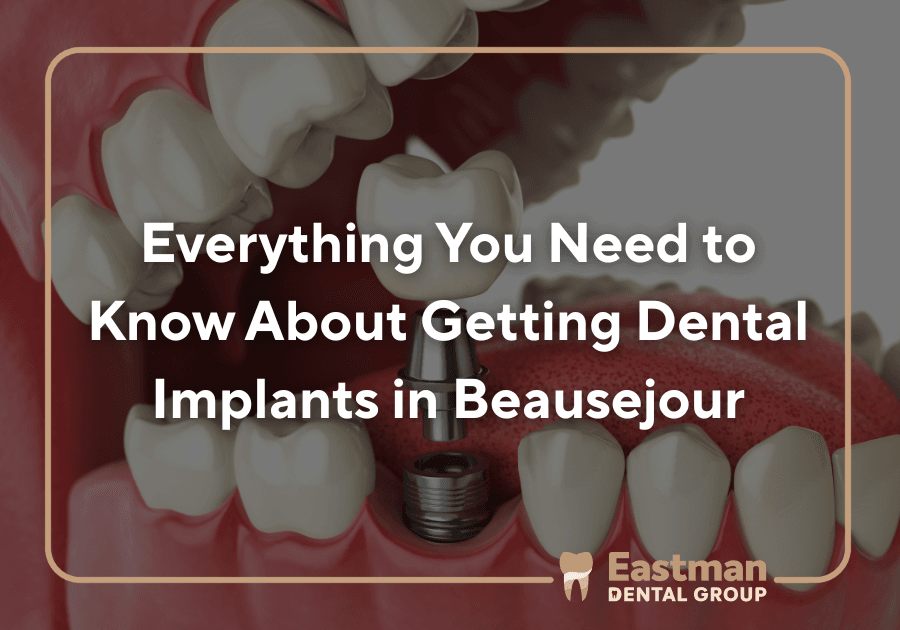
A complete dental implant typically consists of three parts. The implant itself is a small titanium post placed into the jawbone, where it acts as an artificial tooth root. An abutment connects the implant to the final restoration, and a custom-made crown is attached on top to match the appearance of the surrounding teeth. Together, these components create a durable and natural-looking replacement.
One of the reasons dental implants are widely recommended is their ability to integrate with the jawbone through a process called osseointegration. Over time, the bone naturally bonds with the implant, helping to provide long-term stability and support. This biological process is considered the ‘backbone’ of successful dental implant treatment, with modern research confirming high integration success rates when proper protocols are followed.
Benefits of Dental Implants
For many people, the decision to get a dental implant comes down to one simple question: is it worth it? When you understand what implants actually offer compared to other tooth replacement options, the answer becomes clearer.
The most immediate benefit is how natural they look and feel. Because the crown is custom-made to match the colour, shape, and size of your surrounding teeth, most people will not be able to tell the difference between your implant and your natural teeth — including you. There is no clicking, no slipping, and no need to think twice before biting into something.
Functionality is another significant advantage. Dentures can limit what you eat and require extra care to keep in place. An implant, by contrast, is fixed permanently in the jaw, which means you can eat, speak, and go about your day without any restrictions or adjustments to your routine.
Beyond the visible benefits, implants also protect your long-term oral health in a way that other options do not. When a tooth is lost, the jawbone in that area gradually begins to deteriorate because it no longer receives the stimulation it needs. An implant replicates the function of a natural tooth root, helping to preserve the bone and prevent the gradual changes in facial structure that can occur with prolonged tooth loss.
Implants are also the only tooth replacement option that does not rely on neighbouring teeth for support. A traditional bridge requires the adjacent teeth to be filed down to act as anchors, which compromises otherwise healthy teeth. An implant stands entirely on its own, leaving surrounding teeth completely untouched.
Finally, with proper care — regular brushing, flossing, and dental checkups — implants are built to last for decades. For many patients, they last a lifetime. When you factor in the longevity and the reduction in future dental work, the upfront investment often makes strong financial sense over time.
The Dental Implant Procedure: What Happens at Each Stage
The process of getting a dental implant in Beausejour is a thoughtful journey. It is not something that happens overnight, and that is a good thing—your body needs time to heal and bond with the implant. Here is a general look at what you can expect during each stage of the process.
Initial Consultation and Examination
The process begins with a comprehensive dental evaluation. Your dentist will examine your teeth, gums, and jawbone, often using X-rays or 3D imaging to determine whether a dental implant is the right option. This appointment is also an opportunity to discuss your goals, medical history, and treatment timeline.
Tooth Extraction, if Required
If the tooth being replaced is still partially present, it will need to be removed before the implant can be placed. In some cases this can be done on the same day as the implant placement, but more often a short healing period is recommended first to allow the socket to recover.
Implant Placement
Once the site is ready, the titanium post is surgically placed into the jawbone under local anaesthetic. The procedure itself is typically straightforward and most patients report feeling pressure rather than pain during placement. Mild soreness and swelling in the days that follow are normal and manageable with over-the-counter pain relief.
Osseointegration — the Healing Phase
This is the stage that takes the most time, and also the most important one. Over the following weeks — typically between six weeks and several months depending on the individual — the jawbone gradually bonds with the titanium post in a process called osseointegration. This is what gives the implant its exceptional stability. During this period, a temporary crown may be placed so that the gap is not visible while healing takes place.
Abutment Placement
Once osseointegration is complete and the implant is confirmed to be stable, a small connector piece called an abutment is attached to the top of the post. This acts as the link between the implant and the final crown. A brief healing period of a few weeks follows to allow the gum tissue to settle around the abutment.
Attachment of the Final Crown or Artificial Tooth
The last stage is the placement of your permanent crown — the part of the implant that looks like a natural tooth. Impressions or digital scans of your mouth are taken to ensure the crown is made to fit precisely and match your surrounding teeth. Once fitted, the implant is complete and fully functional.
Recovery and Follow-Up Care
Successful implant treatment does not end when the crown is placed. Good oral hygiene, routine dental visits, and regular follow-up appointments help ensure the implant remains healthy and stable for years to come. A dental clinic in Beausejour can provide personalized aftercare instructions and monitor your progress to support long-term success.
Conclusion
Living with a missing tooth is more than just a cosmetic concern; it can affect how you eat, how you speak, and how you feel about your smile every day. While the process of getting a dental implant in Beausejour requires time and patience, the result is a long-lasting, natural-looking solution that restores both function and confidence. By understanding the procedure and its long-term benefits, you are already taking an important step toward making an informed decision that can positively impact your oral health and quality of life for years to come.
If you are considering a dental implant in Beausejour and want to know whether it is the right option for your specific needs, consider reaching out to the team at Eastman Dental Group to assess your oral health, answer your questions, and create a personalized treatment plan designed for long-term success.