For many people, dental appointments aren’t just uncomfortable—they’re something actively avoided. If fear, past experiences, or overwhelming anxiety have caused you to delay checkups or cancel treatments altogether, you’re not alone. This ongoing stress often pushes people to search for alternatives that make dental care feel possible again, which is why so many end up looking into sleep dentistry for anxious patients. This article explains how sedation-based dental care works, who it’s designed for, and how it can transform the dental experience from something feared into something manageable and calm.
Table of Contents
ToggleUnderstanding Dental Anxiety and Why It Matters
Dental anxiety is a widespread condition that ranges from mild “nerves” to a deep-seated phobia that can feel impossible to overcome. A 2025 cross-sectional study involving 389 patients found that moderate to high dental anxiety was present in approximately 47% of the population sampled, with women reporting significantly higher anxiety levels than men across all assessment measures.
It isn’t just a matter of being uncomfortable; it is a significant health barrier. When a patient avoids the dentist due to fear, minor issues like a small cavity or slight gum irritation are left to grow into major infections or tooth loss. By the time the pain becomes too great to ignore, the required treatment is often more invasive and expensive, which only serves to reinforce the original fear.
Beyond the physical health risks, chronic dental anxiety carries a heavy emotional weight. Many people feel a sense of guilt or embarrassment about the state of their teeth, which further prevents them from reaching out for help. Understanding that this anxiety is a valid medical concern is the first step in breaking the cycle. Addressing this fear matters because your oral health is intrinsically linked to your overall well-being, affecting everything from your heart health to your self-confidence.
What is Sleep Dentistry and How It Works
Sleep dentistry refers to the use of sedation to help patients feel deeply relaxed during dental treatment. Despite the name, most patients are not fully unconscious. Instead, they remain in a calm, dream-like state where anxiety fades and discomfort is greatly reduced. Many people remember little to nothing about the procedure afterward, which is often a relief for those with strong dental fears.
The level of sedation used depends on the patient’s needs, medical history, and the type of treatment being performed. It can range from mild sedation that simply takes the edge off anxiety, to deeper sedation for longer or more complex procedures. Throughout the process, vital signs are closely monitored by trained professionals to ensure safety. The goal of sleep dentistry is simple: to make dental care accessible and tolerable for patients who would otherwise avoid it altogether.
The Benefits of Sleep Dentistry for Anxious Patients
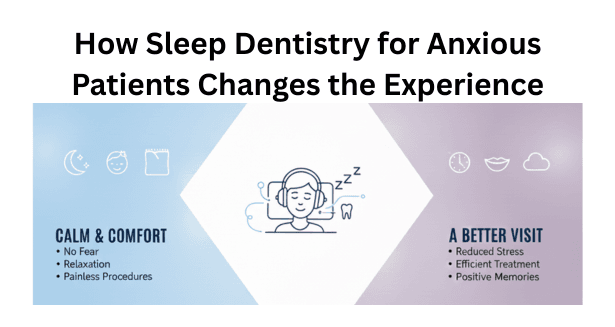
Choosing sleep dentistry for anxious patients offers several practical and emotional advantages that go beyond just “getting through” the appointment. By removing the stress of the procedure, both the patient and the dental team can achieve better results in a more comfortable environment.
Time Efficiency
Because you are relaxed, the dentist can often perform multiple treatments in a single session—such as a cleaning, a filling, and a crown—that might otherwise take three or four separate visits. This means fewer trips to the clinic and less overall time spent in the dental chair.
Reduced Physical Strain
Fear often causes patients to tense their muscles, which can lead to jaw fatigue and body soreness after a visit. Sedation keeps your muscles relaxed, making the physical recovery much easier.
Overcoming the Gag Reflex
For patients with a sensitive gag reflex, dental work can be physically difficult and embarrassing. Sleep dentistry effectively calms this reflex, allowing the dentist to work efficiently without causing the patient distress.
Making Future Dental Visit Easier
One of the most powerful benefits is that patients often wake up feeling like only a few minutes have passed. By replacing a traumatic memory with one of calm and rest, patients often find that their overall dental anxiety begins to decrease over time and make future dental visits easier.
What to Expect during Treatment
Before treatment, the dental team will review your medical history, discuss your anxiety level, and explain the recommended type of sedation in clear, simple terms. You’ll be given instructions ahead of time, such as whether you need to avoid eating or arrange a ride home.
On the day of the appointment, sedation is administered before the procedure begins. As it takes effect, you’ll feel relaxed and comfortable while the dentist carries out the treatment. The dental team will monitor you throughout to ensure everything stays safe and controlled. After the procedure, you may feel drowsy and need time to rest, but most patients report feeling relieved rather than stressed. Knowing what to expect helps reduce uncertainty—and for anxious patients, that reassurance alone can make a meaningful difference.
Patients who want to explore this option further can learn more through the sleep dentistry service provided by Eastman Dental.
Conclusion
We understand that the “domino effect” of dental anxiety—where fear leads to avoidance, and avoidance leads to more complex problems—is a difficult cycle to break on your own. By choosing sleep dentistry for anxious patients, you are taking back control of your health in a way that prioritizes your comfort and emotional well-being.
At Eastman Dental, we believe everyone deserves access to stress-free dental care tailored to their unique needs. If you are ready to experience a calmer, more comfortable path to oral health, we invite you to explore the sleep dentistry service available at our clinic. Schedule an appointment with Eastman Dental team today to discuss how we can help you turn your next dental visit into a restful and positive experience.