
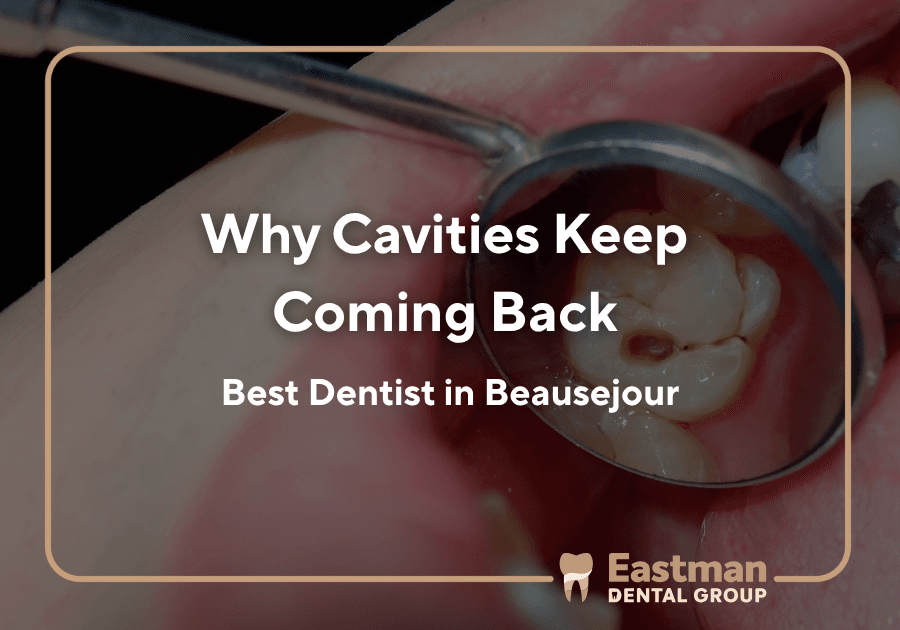
You brush twice a day, you try to floss, and you still end up back in the dentist’s chair hearing the same thing: another cavity. It is frustrating, and it can leave you wondering whether something is simply wrong with your teeth, or whether you have been doing something incorrectly all along without realizing it. The truth is usually more nuanced than either of those explanations. This guide walks through the most common reasons cavities keep returning, why they sometimes form in places that are harder to protect, and what actually helps break the cycle — including when it is time to talk to the best dentist in Beausejour about what might be going on beneath the surface.
Table of Contents
ToggleDoing Everything Right but Still Getting Cavities?
Getting cavities does not always mean you are neglecting your teeth. Even with a consistent brushing routine, there may be other factors increasing your risk of tooth decay. How often you eat or drink sugary and acidic foods, how well you clean between your teeth, the amount of plaque that remains in harder-to-reach areas, and even how much saliva your mouth produces can all play a role. Some people may also have weaker enamel or areas of their teeth that are naturally more difficult to clean.
This is why simply brushing harder is not necessarily the answer. If cavities continue to appear despite your efforts, it may be worth looking beyond your basic brushing routine and considering what else could be contributing to the problem. Understanding these less obvious risk factors can help you make practical changes instead of simply treating one cavity after another.
Common Reasons Cavities Keep Coming Back
Several everyday factors can make cavities more likely to return, even when you are brushing regularly. One of the most obvious is how often your teeth are exposed to sugar. In fact, a 2022 study highlights that the frequency of your sugar intake is a primary driver of dental caries because it dictates how long your mouth stays in an acidic state. It is not only the amount of sugar you consume that matters, but how frequently you eat or drink it throughout the day. Constantly sipping sweetened coffee, soft drinks, juice, or snacking on sugary foods gives the bacteria in your mouth repeated opportunities to produce acids that attack your teeth.
Your brushing and flossing routine matters too, particularly when certain areas are consistently missed. Plaque is a sticky layer of bacteria that builds up on the teeth, and if it is not removed regularly, it can contribute to tooth decay. Brushing too quickly, using an ineffective technique, or skipping cleaning between the teeth can leave plaque behind even when you brush twice a day.
Dry mouth is another factor that is easy to overlook. Saliva helps wash away food particles and neutralize acids in your mouth, so having less saliva can leave your teeth more exposed to decay. Dry mouth can have several causes, including certain medications, dehydration, and some health conditions. If your mouth often feels unusually dry, it is worth mentioning this to your dentist.
Finally, some people are simply more prone to cavities because of factors such as naturally weaker enamel, deep grooves in the back teeth, or previous dental work. If you keep developing cavities despite maintaining good habits, a dental examination can help identify whether there is a specific pattern or risk factor behind the problem. A thorough assessment from a best dentist in Beausejour can help you address the reason cavities keep appearing rather than simply waiting for the next one to develop.
The Vulnerability of Old Fillings and Hard-to-Reach Spots
Sometimes, a cavity develops not on a fresh surface, but right next to an old repair. Dental fillings do a great job of restoring a damaged tooth, but they do not last forever. Over years of biting, chewing, and experiencing temperature changes from hot and cold foods, the bond between the filling material and your natural tooth can begin to weaken. Microscopic gaps can form at the edges, creating the perfect hiding spot for bacteria. Because your toothbrush bristles cannot reach inside these tiny crevices, decay can easily develop underneath or around the existing filling.
The natural shape of your teeth also dictates where cavities are most likely to form. Your back molars are heavily textured with deep grooves and pits to help you chew food. These grooves easily trap sticky foods and plaque. Even with excellent brushing habits, it can be physically difficult to clean these narrow crevices thoroughly, making the back teeth a very common location for recurring decay.
How to Actually Break the Cycle
Breaking a pattern of recurring cavities usually requires a more targeted approach than simply repeating the same routine and hoping for a different result.
Start with good brushing technique rather than brushing frequency. Spend a full two minutes brushing, angle the brush toward the gumline, and pay deliberate attention to the back teeth and the areas where previous cavities have occurred. A soft-bristled toothbrush paired with fluoride toothpaste is the standard recommendation, since fluoride actively helps strengthen enamel and reverse very early decay before it progresses.
Make flossing a genuine daily habit rather than an occasional effort. If traditional floss is difficult to use consistently, interdental brushes or a water flosser are effective alternatives that many people find easier to stick with long-term.
Pay attention to how often you expose your teeth to sugar and acid, not just how much you consume overall. Drinking water after sugary or acidic foods, and giving your mouth a break between snacks rather than grazing throughout the day, gives your enamel a genuine chance to recover.
Staying well hydrated supports healthy saliva production, which is one of your mouth’s most effective natural defenses. If dry mouth is a persistent issue, it is worth mentioning to a dental professional, since there may be underlying causes worth addressing directly.
Finally, and most importantly, keep up with regular professional cleanings and checkups — generally every six months, though some patients benefit from more frequent visits depending on their individual risk. Professional cleanings remove the plaque and tartar that brushing alone cannot fully clear, and routine exams allow a dentist to catch early decay, check the condition of old fillings, and identify patterns before they become a repeating cycle. If cavities keep returning despite consistent effort at home, that pattern itself is worth raising directly with the best dentist in Beausejour, who can assess what is specifically driving the issue rather than treating each cavity as a standalone problem.
Conclusion
Getting another cavity when you feel like you are already doing everything right can be frustrating, but it does not necessarily mean you are failing at taking care of your teeth. Recurring cavities can be linked to several factors, from frequent sugar exposure and plaque buildup to dry mouth, hard-to-clean areas, or problems around older fillings. Understanding what is behind the pattern is the first step toward breaking it rather than simply treating one cavity after another. If you cannot seem to figure out why the problem keeps returning, speaking with the best dentist in Beausejour can help you identify the specific risk factors affecting your teeth and create a more targeted approach to prevention.
At Eastman Dental Group, we believe dental care should help you understand what is happening in your mouth, not leave you wondering why the same problem keeps coming back. If you are dealing with recurring cavities, we can assess your oral health, discuss what may be contributing to the problem, and help you determine the next steps for protecting your teeth. Schedule a consultation today and let us support your ongoing oral health.