
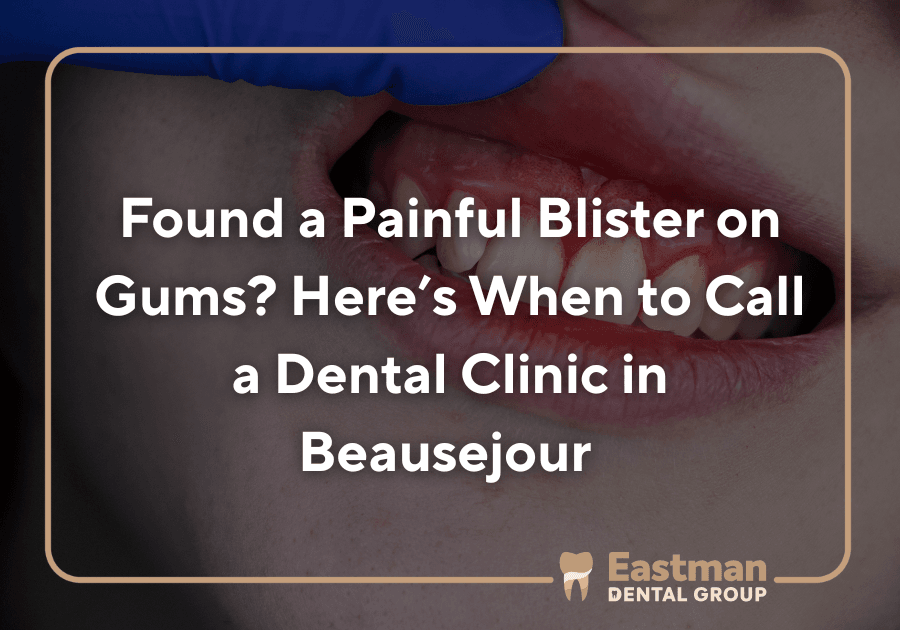
Noticing a sudden, painful bump in your mouth can be alarming, often leaving you to wonder if it is a minor irritation or a sign of something more serious. That unexpected discomfort can make everyday tasks like eating or talking feel like a chore, and the natural instinct is to search for answers immediately to stop the pain. While some mouth sores resolve on their own, others may require professional intervention to prevent an infection from spreading or to address an underlying dental issue.
If you are currently dealing with a blister on gums that refuses to go away, reaching out to a professional Dental clinic in Beausejour is the safest way to ensure your oral health is protected and to find the relief you need. This guide covers everything you need to know: what commonly causes a blister on gums, which symptoms deserve prompt attention, and when it is time to stop waiting and call a dental clinic in Beausejour for a proper evaluation.
Table of Contents
ToggleWhat Is a Blister on Gums and Should You Be Worried?
A gum blister is a small, raised bump that forms on the soft tissue surrounding your teeth. It can appear white, yellow, or red depending on the cause, and may feel tender, swollen, or filled with fluid. Some are barely noticeable and resolve on their own within a week or two. Others are persistent, painful, or accompanied by other symptoms that suggest something more significant is going on beneath the surface.
The honest answer to whether you should be worried is: it depends. Not every gum blister signals a serious problem, but none of them should be completely ignored either. A blister that appears once, causes mild discomfort, and clears up within a few days is usually not cause for alarm. A blister that lingers, grows, keeps returning in the same spot, or comes with swelling, fever, or a bad taste in the mouth is your body’s way of flagging that something needs attention. The difference between the two is exactly what this article will help you understand.
Common Causes of a Blister on Gums
A blister on the gums can develop for several different reasons, ranging from minor irritation to more serious dental infections. One of the most common causes is a dental abscess, which occurs when bacteria infect the tooth or surrounding gum tissue. In these cases, the blister may act as a drainage point for the infection and is often accompanied by pain, swelling, or an unpleasant taste in the mouth.
Not all gum blisters are infection-related. Canker sorescan also appear on the gums and usually present as small, painful ulcers with a white or yellow center. These sores are not contagious and often heal on their own. Physical irritation from sharp foods, accidental bites, poorly fitting dental appliances, or aggressive brushing may also cause localized blisters or sores. Clinical studies show that mechanical trauma (such as sharp foods or accidental bites) triggers 41.9% of canker sore cases, with 94% healing spontaneously within 7-14 days.
Gum disease is another possible cause, particularly when inflammation becomes more advanced. In some cases, a blister-like bump may form as the body’s response to bacteriatrapped beneath the gum line. Because many of these conditions can look similar, a professional examination is often needed to determine the true cause and the most appropriate treatment.
Symptoms That Should Not Be Ignored
While some gum blisters are temporary and harmless, certain symptoms may indicate a more serious issue that requires prompt attention. Persistent pain, significant swelling, or a blister that continues to grow rather than heal are all signs that something more than simple irritation may be occurring.
You should also pay close attention to symptoms such as pus drainage, a bad taste in the mouth, fever, swollen lymph nodes, or difficulty chewing and swallowing. These can be warning signs of an active infection that may spread if left untreated. Infections originating in the mouth do not always remain localized and can affect surrounding tissues over time.
Another important warning sign is a blister that repeatedly returns in the same location. Even if the discomfort comes and goes, recurring symptoms often suggest an underlying dental problem that has not been fully resolved. When these signs are present, professional evaluation is the safest course of action.
Home Care vs. When to See a Dentist
For mild irritation or minor sores, simple home care may help reduce discomfort while the area heals. Rinsing gently with warm salt water, maintaining good oral hygiene, staying hydrated, and avoiding spicy or acidic foods can help minimize irritation. Over-the-counter pain relievers may also provide temporary relief if needed.
However, home remedies should be viewed as supportive care rather than a solution for ongoing problems. If the blister lasts longer than one to two weeks, becomes increasingly painful, or is accompanied by swelling, fever, or drainage, it is time to seek professional care. These symptoms often point to a condition that requires treatment beyond what can be managed at home.
A dental clinic in Beausejour can evaluate the affected area, identify the underlying cause, and recommend the appropriate treatment. Depending on the diagnosis, this may involve treating an infection, addressing gum disease, repairing a damaged tooth, or managing another underlying condition. Seeking help early often leads to simpler treatment and helps prevent small issues from developing into more serious complications.
Conclusion
Dealing with a persistent blister on gums is stressful, but you don’t have to face the uncertainty of what it might mean alone. We hope this guide has helped you understand the difference between temporary irritation and the warning signs that truly require a professional’s touch. The best way to end the discomfort—and protect yourself from more complex issues down the road—is to get a clear diagnosis from a team that prioritizes your comfort and long-term oral health.
If you are experiencing a blister on gums that is not improving or you are unsure whether your symptoms require treatment, a trusted dental clinic in Beausejour can help identify the cause and recommend the most appropriate solution. For more information about gum health concerns and available treatment options, visit Eastman Dental Group. Seeking professional advice early can provide peace of mind, relieve discomfort, and help protect your long-term oral health.